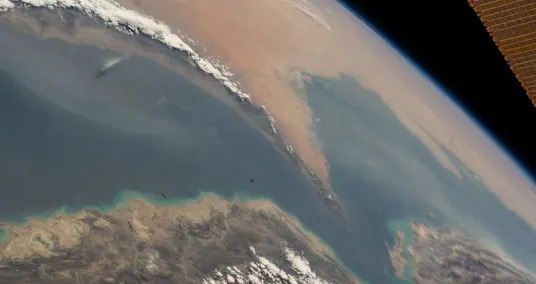
(Bloomberg) -- Two liquefied natural gas tankers from Qatar in the Persian Gulf have switched to Pakistan as their next destinations after appearing to abort an earlier attempt to leave via the Strait of Hormuz.
The Al Daayen and Rasheeda had u-turned away from the strait after earlier heading eastward to the waterway, according to ship-tracking data compiled by Bloomberg, in the first attempt to export the fuels from the Persian Gulf since the Iran war began. They had each loaded LNG from Qatar’s export plant in late February, ship data shows.
So far, no loaded LNG tanker has passed through Hormuz since the US and Israel began strikes on Iran in late February. It isn’t clear if the ships will try again to pass through the strait, and the ship’s destinations are not final and could change their indicated port of call at any time. The Al Daayen was earlier signaling delivery to China.
The effective closure of the key waterway near Iran and the Arabian Peninsula has choked off energy flows to global markets, disrupting about a fifth of the world’s supply of LNG. Another tanker, which appeared to not be carrying a shipment, passed through the strait over the weekend.
Qatar has delivered two LNG shipments to Kuwait over the past few weeks, according to ship-tracking data compiled by Kpler. These supplies were likely loading from Qatar’s storage tanks, and don’t require traversing Hormuz.
Meanwhile, the vessels’ shift in destination to Pakistan — a major buyer of Qatari LNG — may be part of an effort to secure passage through the strait. Bloomberg reported last week that Pakistan is weighing options including allowing other ships to carry critical cargo under its flag, after Iran said it would permit 20 Pakistani vessels to transit the Strait of Hormuz.
Tracking vessel movements around the Persian Gulf can be inexact because of the potential for electronic interference with ship signals and the intentional disablement of transponders by pilots sailing through risky zones.
Seapeak manages Al Daayen, and Nakilat owns Rasheeda, according to ship database Equasis. Neither company immediately responded to a request for comment.
Transit through Hormuz would be a shot in the arm for Qatar, which supplied nearly a fifth of all LNG last year, even as the country’s Ras Laffan export plant has been shut for over a month due to Iranian attacks. This could allow Qatar to send more shipments that are already loaded and waiting within the Persian Gulf, or offload fuel from storage.
QatarEnergy, which operates Ras Laffan — the world’s largest LNG export plant — didn’t immediately respond to a request for comment.
LATEST POSTS
- 1
 NASA’s Artemis II launch leaves Americans in awe: ‘We’re going to the frickin’ moon!’
 - 2Guinea-Bissau's coup called a 'sham' by West African political figures
- 3Iran’s Crown Prince Reza Pahlavi backs protests: Join your fellow citizens in the streets
- 4German-Polish man charged with calling for attacks on top politicians
- 5NASA's Apollo 8 moonshot saved 1968. Could Artemis 2 do the same in 2026?




- Report: Thailand strikes deal with Iran for safe passage of Hormuz
- Haunting Giant Squid Surfaces in Japan and Devours Its Prey (Video)
- Scientists document a death from a meat allergy tied to certain ticks
- A definitive Manual for 2024's Most In vogue Wedding Dresses
- Russia accidentally destroys its only way of sending astronauts to space
- Geminid meteor shower 2025 peaks next week. Here's what you need to know about this year's best meteor shower
- At UN climate conference, some activists and scientists want more talk on reforming agriculture
- Understanding Preschool Projects: An Extensive Aide
- The 10 Most Significant Games in History