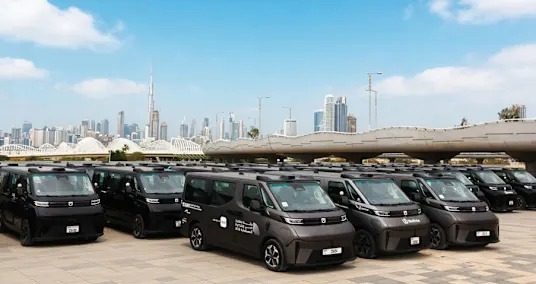
The dream of driverless taxis continues in the Gulf, where the conflict with Iran has slowed but not stopped progress on autonomous transport in Abu Dhabi, Dubai, and Riyadh.
Uber and WeRide added another driverless route in Saudi’s capital this week, linking shopping centers Hayat Mall and Riyadh Gallery. The expanded service comes after the vehicles completed more than 1,700 trips in a trial phase, according to the regulator.
Uber and WeRide have also launched fully driverless services in Dubai, beginning in popular residential and commercial areas Jumeirah and Umm Suqeim, with no safety monitor on board. Separately, Dubai Taxi Company plans to deploy more than 1,000 driverless cars in the city with Baidu’s Apollo Go, starting with a fleet of 50 this year. Earlier this month, Autogo, part of Abu Dhabi-backed technology company K2, began offering rides on Yas Island, and it plans to expand to Saadiyat and Al Maryah islands.
All this is bad news for the region’s taxi drivers, a largely South Asian group whose business is already down due to the conflict with Iran.
LATEST POSTS
- 1
 Israel strikes Iranian nuclear development facilities, Tehran vows retaliation
 - 2Vote In favor of Your Number one Game Control center
- 3NMG signs new graphite supply deal with Canadian Government
- 4Five held on suspicion of planning attack on German Christmas market
- 5Picking the Right Home Machines: A Commonsense Aide




- Journey through Pages: A Survey of \Plunging into Scholarly Universes\
- Administrative building in Sharjah region targeted by Iranian drone, UAE authorities announce
- Soldiers seize power in Guinea-Bissau and detain the president
- African nations push to recognize crimes of colonialism in Algeria
- They grew up with 'almond moms.' Now, they dread going home for the holidays.
- Cognizant Couture d: A Survey of \Moral Decisions and Sharp Looks\ Maintainable Style
- Metropolitan Greatness: The 6 Urban areas for Quality Living in 2024
- Drenched in Pixels: A Survey of \Vivid Interactivity Experience\ Game
- A single shot of HPV vaccine may be enough to fight cervical cancer, study finds